The date is August 14, 1974. After the first operation on July 20, Turkey is carrying out a second operation in Cyprus.
The 12 Turkish journalists who went to the island after the ceasefire was declared on July 22 are there to report the region’s latest situation and what is happening to the world, and to avoid missing a possible second operation…
Lefke, one of the places Turkish troops could not reach during the first operation on July 20, has been defended by fighters for years. But Lefke, which has been placed under siege by Greek Cypriot and Greek forces, is forced to surrender on July 22. The fighters lay down their arms and return to their homes.
“Lists of names had been prepared, a major hunt had begun, and in operations, the fighters in the command ranks had been torn from their homes and families. Now they were being secretly taken somewhere. The unknown captivity was beginning.” Meanwhile, as the journalists who managed to witness the second operation set off for Kyrenia, anxious to get the photographs they had taken and the stories they had written to Turkey as quickly as possible, they are attacked by Greek Cypriots on the ‘shortcut’ they have taken. Their driver is killed on the spot. Adem Yavuz and Ergin Konuksever are wounded. They are taken prisoner along with Cengiz Kapkın.
Another group of 10 journalists who had also come to Cyprus to report the news is taken prisoner. They include Ertürk Yöndem, Mete Akyol, Sermet İpekçioğlu, Yücel Hacaloğlu, Hami Sami Coşar, Ziya Ergun, Hüdai Bayık, Ahmet Kahraman, Teoman Fehim, and Eyüp Sabri Kapıdağ. But the Greek Cypriots do not want to announce that either the journalists or the fighters have been taken prisoner. Unaware of one another, the prisoners are moved from place to place for days, brought ‘face to face with death’ at every turn… The fighters and the journalists finally meet at the Limassol Police Department.
The Turkish Cypriots, who are assigned to clean the cells and corridors, get a chance to talk to the journalists during this time. Since the whereabouts of these Turks—whose captivity the Greek Cypriots are keeping secret—are unknown, it is impossible for Turkey to take international action. Seventy-five people are ‘unknown prisoners’ in Greek Cypriot hands.
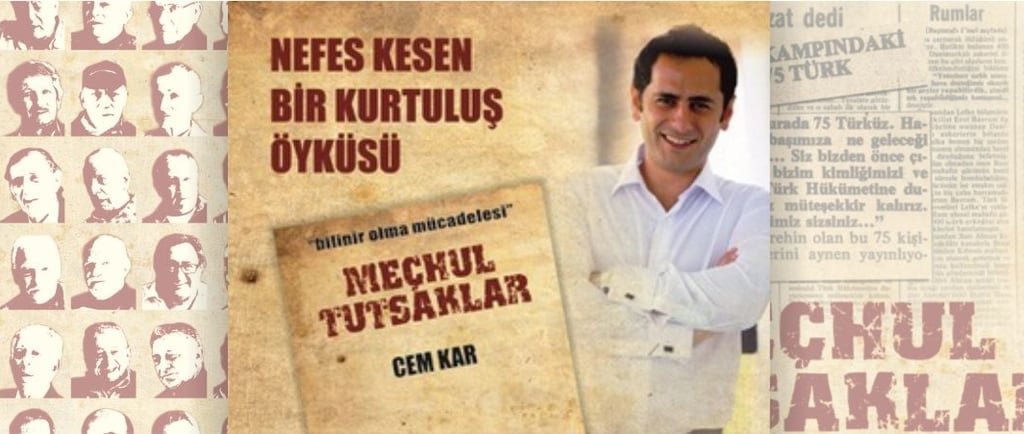
CEM KAR WROTE IT AND MADE IT INTO A FILM Journalist Cem Kar has prepared this little-known story of the Cyprus operation as a documentary film and a book. In his two-year project, he is unable to speak with two journalists because they are no longer alive, and with one because he cannot reach him. But he manages to speak with all the others.
Of the 75 fighters considered missing, he reaches 50 who are still alive. In addition to the 43 who agree to be interviewed, he also speaks with Orhan Birgit, the Tourism and Publicity Minister and government spokesperson at the time; Founding President Rauf Raif Denktaş; and Makarios’s head of personal security, who took the journalists to Limassol.
1,500 MINUTES OF INTERVIEWS WITH 57 PEOPLE Kar, who conducted more than 1,500 minutes of interviews with 57 people at different times and places and collected documents related to the subject, says: “The film and book *Unknown Prisoners* shed light on what happened between 1963 and 1974 and on the Cyprus issue. All the interviews were turned into written text for the book; these experiences were written up using a different narrative structure. This historical event was made into more than just a straightforward text.”
The documentary also includes the story of the first hidden-camera recording in Turkish television history. MARTYR ADEM YAVUZ Cem Kar also devotes a special section to Adem Yavuz, who was shot and wounded during the Cyprus Peace Operation, held prisoner for days while wounded, and was the first and only journalist from the Turkish press to be killed during the operation. Under the title “A Picture That’s Quite Sweet,” it tells of Yavuz’s insistence on going to Cyprus despite all the difficulties, and of what he experienced up to the moment he was killed.