Nupelda KARABUĞDAY
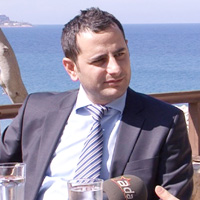
Journalist Cem Kar said that the key issue in the Cyprus problem is being able to see where the process we are going through will lead us Journalist Cem Kar, who said that society experienced serious disinformation during the Annan Plan period, stressed that lessons should be learned from that time and that steps taken today should be measured. Kar, who stressed that Turkish Cypriots want a solution, said that the key issue is being able to see where the process we are going through will lead us. Kar also noted that there are political parties representing particular groups, and likened the politics practiced in our country to “backroom politics.” Journalist Cem Kar, who answered Gözde Akben’s questions on ADA Haber, highlighted developments in the country. Here are the key points from Kar’s remarks…
‘BARGAINING BEHIND CLOSED DOORS’
“There is a landmark moment on February 27. Cross-community meetings will take place. This is truly important. The Greek Cypriots had constantly wanted to meet with officials in Turkey. There is momentum in the negotiating process. The state of the government at home does not have much effect on the negotiations. The politics practiced here is backroom politics. I don’t think it will affect the external negotiations. Bargains are being made behind closed doors: three ministries for you, two for someone else. This is a completely ridiculous situation, driven by the attitude that whatever I can get is a gain. As for foreign policy, in the context of the negotiations on the Cyprus problem, former President Mehmet Ali Talat gave an important conference. It was protested; he held the conference in Paphos, and in an environment where it was being protested, he said, “The people want peace.” Do we actually want peace? Of course, by peace we mean a solution. Turkish Cypriots want a solution, but where this process will lead us—that is the real issue.
‘WE MUST LEARN FROM THE ANNAN PLAN’
This goes beyond a dissenting voice; there are parties representing particular groups. These parties make statements. At one point during the process, the President made a statement. He said, “Do not give credence to statements other than ours.” That is quite right, too. Because the other statements are made by their own politicians to their own constituencies. The truly important point is that we went through a process during the Annan Plan period. We need to learn from it. Journalists, politicians and civil society organizations in particular need to learn from that period and act with maturity. Society experienced serious disinformation at the time. If we are all focused on a solution—which, if you ask all the parties, they will all say they want—then we need to be realistic. The prominent members of society must certainly share information with the President and the negotiating team. There should be brainstorming. There are issues concerning governance, security and property. Governance issues, along with property rights and the division of property, are especially significant. We need to remain in a position to make constructive contributions. We need to keep generating ideas and contribute to finding solutions to the problems.
‘AN EXPERT ON GOD KNOWS WHAT IN ONE WEEK’ In our country, anyone can be someone who says, “I’m this or that.” In a week, any random person can become an expert on God knows what. We need to be careful about them. Society needs to be careful, too. We have very good universities in our country, and by drawing on the academics at those universities and on civil society organizations, we can make a significant contribution to the negotiating process. “