Gözde AKBEN
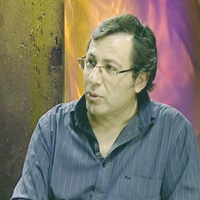
The much-anticipated and widely discussed film As the Sun Sets, which has been among the most talked-about films in recent days, was discussed on the Midday Agency Program hosted by Cem Kar. The film’s director, Cemal Yıldırım, answered questions about the film.
“OUR CURIOSITY ABOUT EXPERIMENTING BROUGHT US TO THIS POINT” Yıldırım said, “Our film was presented as Northern Cyprus’s first feature film. But when we were making it, we had no such claim or idea in mind. Our only aim was to try something out. We thought it was time to give it a try. It was a long and tiring, but enjoyable, journey. Because we were the first and there was no industry, everything was difficult. We tried to make it happen through struggle, pushing and shoving. We actually began the film in 2008. We entered 2010, and we are only now getting the film in front of audiences. The reason it took this long was that we kept experimenting. We were constantly asking ourselves how we should do things. Everything was a learning experience for us. Our starting point was to experiment, really. We wanted to find out whether a feature film could be made in this country. I had always wanted to make a film. This curiosity brought us to this stage.” Noting that, after seeing some films criticized on a sharing website, they began asking themselves why they could not make a film themselves, Yıldırım said, “That sharing website was actually the first step of the project.”
“COR MACIT BURNU GAVE THE SCRIPT ANOTHER DIMENSION” Noting that everyone went through a difficult and exhausting process while the film was being made, Yıldırım said, “First, you plan what you’re going to shoot. Then the location gives you the depth and angle you can shoot from. After seeing the location, we start thinking, ‘What if I shoot this shot here?’ Ninety percent of the film was shot at Kor Macit Burnu. Kor Macit Burnu is among the world’s top 10 places for watching the sunset. We did most of our filming in this area. The moment we saw the location, many events in the script took on a completely different dimension, because it is such an unusual place.” Noting that the story and script were by Kuzey Tarık, Yıldırım said, “I helped with the script from a technical perspective. I also contributed a few things to the story and introduced some characters. Kuzey had written something more abstract, drawing on his experiences in relation to his own art. He had written a story about the problems an artist might face while creating, and about their relationships with their family and community. By adding characters, I helped adapt the subject a little more to the present day. But the starting point was Kuzey’s story.”
“THE FILM CANNOT BE SCREENED WITHOUT AN AGREEMENT BETWEEN THE COMPANIES” Noting that they had shot the film in HD (High Definition), Yıldırım said, “After the film was finished, having it transferred to 35mm so that audiences could see it in cinemas required a substantial sum. These figures might be laughable for people making films in Turkey, but for us they were quite a large amount. We couldn’t raise the money, because by the time we finished shooting, we had used up all the financial resources we had. We didn’t have much of a budget to begin with. We couldn’t find a sponsor. Since it was the middle of the year, we didn’t get a clear answer, and the process dragged on. Because we couldn’t transfer the film to 35mm, and the screening schedules for cinemas here came from Turkey, the cinemas here were automatically closed to us. We were told that we would have to go to Turkey, reach an agreement, and then, once approval came from Turkey, the film could be shown in 35mm.” He added, “From a professional standpoint, film companies sign agreements with cinemas, and if they don’t reach an agreement, the films can’t be screened. We also encountered this upsetting problem, but since it is the global standard, we couldn’t really object, and we didn’t want to prolong the matter.”
“CYPRUS’S LANDSCAPE IS VERY SUITABLE FOR FILMING” Noting that the film had so far been screened at a festival in Antalya, Yıldırım said, “Because our country is not recognized, the officials couldn’t decide which category the film should be placed in. In the end, they resolved the issue by creating a special screening category, and we received positive reactions from viewers.” Noting that Cyprus has a natural environment very well suited to filming, Yıldırım emphasized that the light—a gift of Cyprus’s natural environment—could be used very effectively and productively, and that they themselves had not used any artificial lighting during filming except at night. Yıldırım invited those who wanted to see the film to the Girne Municipality Cultural Center on Friday and Saturday.