Gözde AKBEN
Developments concerning the flood disaster were discussed with Cem Kar on the Öğlen Ajansı program. Officials who joined the program by phone tried to answer the questions, “Where did things go wrong? And what will happen from now on?”
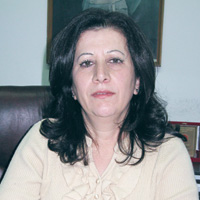
ALTAN: “AFTER GÜZELYURT, THEY BROUGHT FORWARD A PROJECT TO BUILD IN THE STREAMBED” Speaking to the program by phone, Environmental Protection Department Director Hülya Altan said that nature reacts to every kind of development made against it. Altan said: “Decisions concerning the environment always come back to us. If these decisions are good, their effects are positive; if they are bad, their effects are negative. Perhaps it may not be appropriate to discuss these things under the current circumstances, but we have experienced a natural disaster. I hope we can take more positive steps from now on. We spoke with our minister early this morning. At the first stage, of course, we are concerned with the environmental aspect of the incident. We assessed what we could do and what we might need in relation to the environmental aspect. Shortly, the ministry will begin working together with the relevant ministries,” she said.
Commenting on the criticism they had faced over permits issued for construction, in connection with the Town Planning Department and EIA reports, Altan said: “I don’t think it is right, amid this tension, to get into who said what. But I would like to say this on behalf of my own department: We are not responsible for approving residential buildings. As the Environment Department, we are primarily an institution that provides guidance from an environmental perspective. As stated in the Environment Law, we assess projects that used to involve more than 20 homes and now involve more than 60. Individual homes or projects involving three or five homes built separately have not sought our opinion in any way. But I should also say that some of our municipalities are very sensitive about this and ask for our opinion anyway. I cannot recall the Environmental Protection Department ever giving a favorable opinion on a project in a streambed; it has not done so. In fact, I think it is one of the institutions that has fought hardest on this issue. The Environmental Protection Department absolutely did not approve the construction of homes in a streambed. The Environment Department prepares environmental reports every year. We have also shared these reports with the press. The first item in the environmental report set out what needed to be done regarding streambeds, and the report was distributed everywhere. It was sent to all relevant institutions and ministries, including the Assembly. Since then, I have not seen any significant steps taken on this issue. After the Güzelyurt disaster, there were projects proposed for construction in a streambed, and we issued reports stating that they were ‘not suitable.’ Projects were submitted even after that incident. But, as I said, we are only authorized to carry out assessments concerning the environment. We are not the permitting authority. In other words, we give our opinions on projects subject to certain conditions. In areas covered by planning schemes or orders, the Town Planning Department asks for our opinion. In other areas, or, as I said, where a project is not subject to an EIA but a municipality considers it necessary, we may also be asked for our opinion. We have certainly issued warnings to the relevant authorities, but we are not a law-enforcement agency. We have no duty to go there and stop the work or cause an incident; we can only assess it. When we look at the cases, the ones causing problems are individual residences. For example, the GÜYAP project in Göçmenköy dates from long before our time. We should not be in this situation today. We need to look at what happened in the past and set our goals for the future correctly. But we must not forget that every wrong decision concerning the environment will certainly make itself felt. That is why we should try not to make wrong decisions about the environment. Those at fault should be held accountable. This is not limited to this issue. We must not become so complacent,” she said.
KAMİLOĞLU: “LIFE AT THE HOSPITAL IS RETURNING TO NORMAL” Developments at Nicosia State Hospital, one of the places most severely affected by the flood disaster, were reported by Associate Professor Dr. Ramadan Kamiloğlu, the hospital’s deputy chief physician. Kamiloğlu said: “Everyone should take something away from natural disasters. It is very easy to criticize. Everyone should know that these buildings were constructed many years ago and were not built by the current minister. Natural disasters happen all over the world. We have been hit by a very major natural disaster. We have been supplying the city’s mains water since the day before yesterday. From the outset, we ensured the supply of oxygen, nitrogen and electricity at critical points. Starting this evening, unless something goes very wrong, we will be able to supply electricity to our main building using generators. As you know, all the support units at our hospital were moved to the basement when it was built. They were all flooded. In other words, when our main switchboards are underwater, electricity cannot be supplied everywhere. There are technical limitations, but as soon as the flood disaster began, our army, Civil Defence and similar organizations gave us tremendous support. Just think: Civil Defence worked at this hospital for three days and three nights. That is no easy task. So, starting this evening, we too will try to get back on our feet,” he said.
Clarifying whether any forecasts had been made about what might happen in the event of such a disaster, Kamiloğlu said: “No one has experienced a flood disaster like this for 50 or 60 years. Acres of land were underwater before you could travel 100 metres. No embankment or anything else could have stopped it. This is not something that can be done in an instant. The existing streambed needs to be at least three times as large. Concrete embankments need to be built. We will try to do all of this as soon as possible,” he said.
Commenting on the failure of the 112 emergency number and its unavailability because of the flood disaster, Kamiloğlu said: “All the lines ran through the basement, so they were underwater. But in the event of an accident, we have a radio system. Since this radio system allows us to stay in contact with the police, Civil Defence and similar organizations, we can respond immediately to incidents based on calls made to the police or other places. These disruptions occurred because the basement was completely flooded,” he said.
OKTAY: “THE WEATHER IS WARMING; THERE MAY BE SOME RAIN ON THE 3RD” Meteorology Department Director Fehmi Oktay said that a mild air mass would affect the country this week following the flood disaster, and that there might be light rain on Wednesday. Oktay said: “This week we are under the influence of a mild air mass. The temperature is rising by 2 or 3 degrees. Mostly clear skies will prevail throughout the week. On the 3rd, the weather will be partly cloudy, and there is also a chance of a passing light shower,” he said.
Assessing the flood disaster, Oktay said: “Whether precautions could have been taken is a somewhat difficult question. Could you have demolished the houses or bridges? Could you have changed the course of the streams? These are all question marks. But the answer is clear: ‘No, we couldn’t.’ I can say that it is good that the agencies were on standby and went to these places immediately,” he said.
Assessing why the country was so badly affected by the rainfall, Oktay said: “The rainfall was above normal. But I don’t believe there was enough rain to cause so many streams to overflow. I think our reservoirs had filled up in previous periods. We can say that this happened because the reservoirs overflowed and the rainfall in the Beşparmak Mountains was heavy,” he said.