Gözde AKBEN
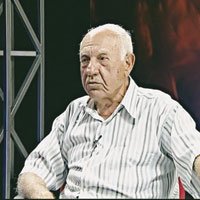
Nejat Konuk, the TRNC’s first Prime Minister, answered Cem Kar’s questions on the Öğlen Ajansı program on Ada TV, where he was a guest. Describing Cyprus during his time in office and Cyprus today, Konuk stressed that politics lay behind the country’s first general strike, noting that politics had been used for many different purposes in the country up to now.
“THE EXPECTED REFORMS WERE NOT CARRIED OUT” Konuk said there was no legal framework concerning trade unions in the country in 1976, and that the failure to make the necessary regulations was behind unions’ ability to go on strike so frequently in recent times. Konuk said: “These days, unions are holding many strikes. In the 1970s, there were no regulations concerning unions at all, and despite that, we tried to issue the necessary warnings. The governments that came later should have put regulations in place to prevent strikes like these. What is a strike for? It is for workers to demand their rights, but using it for political purposes really means dealing a major blow to this state. There have been strikes aimed at protecting workers’ rights, but they have generally been used for political purposes. The strange thing is that in my time there was a powerful union called Türk-Sen, headed by the late Necati Taşkın. Necati Taşkın asked for a quota. We gave him the seventh and tenth spots. Under the electoral system at the time, you had to elect either the first nine people or the last nine, which left the person in tenth place out, so he was not elected. Thinking we had done this deliberately, he said, ‘I will fight you to the end,’ and he launched the country’s first general strike. It was a strike carried out entirely for political reasons. Politics was used as a tool not only in this matter, but in many others as well. I became prime minister and saw that one person’s job was being done by ten people. None of those ten people was taking responsibility. I thought we should create a system in which everyone took responsibility for their own work and was accountable to those in power and to the government. That is how the issue of early retirement arose. Early retirement was introduced during my time, and my intention was to introduce a personnel system as a reform suited to the conditions of the day by implementing early retirement. Unfortunately, my political tenure was not long enough for that. Two years later, so as not to come into conflict with Mr. Denktaş, I resigned both as prime minister and from the UBP. Unfortunately, these expected reforms were not carried out after me. Some people retired early, and new jobs were created for political purposes to replace those who left,” he said.