I’m sure the devoted readers of this series will remember that last week I featured the same documentary again and welcomed its director, Fevzi Tanpınar, as my guest.
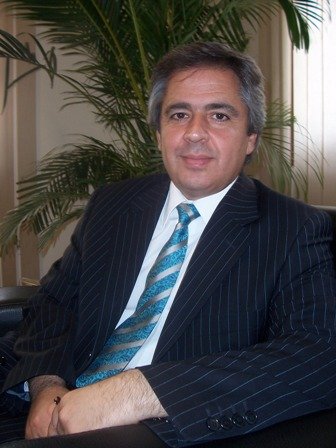
I would also like to thank Mr. Pertev here for taking the time to speak with me.
“There was a film with monsters and giants, and my mother covered my eyes during one scene…”
Cem KAR: It’s become a tradition: the first question in our series is, What was the first film you watched? Whenever I ask this, my guests take a journey back in time. I wonder where this question will take you.
Raşit PERTEV: This question took me to Larnaca… Going to the cinema there was a big event. In those years—the 1960s—there were open-air cinemas that everyone went to. The sound from those cinemas echoed across the town; if the same thing happened today, people would probably call it noise pollution. Back then, because it was a sound that caught everyone’s attention, people listened to it with interest. On a beautiful, starry night (there weren’t so many lights back then), the whole family would go to the cinema; out in the open, there was the sound of crickets and so on—in other words, happy sounds alongside ever-changing images.
Unfortunately, I can’t remember the name of the first film I watched. But I do remember this: there was a film with monsters and giants, and my mother covered my eyes during one scene so I wouldn’t see it!
C.K.: So you were subjected to your mother’s censorship?
R.P.: Yes… (We laugh.) But I did see a little through the gaps between her fingers. That’s the scene I remember from the first film I watched. The films we saw in those years were familiar: films made by Yeşilçam, with its famous characters, and films set in ancient Rome.
C.K.: A film can change the course of a person’s life. Films can play an influential role when people are making decisions about the future. Are there any films that affected you and fall into the category I mentioned?
R.P.: We grew up with Turkish cinema. We also watched foreign films, though they were of a certain standard. It was only after going abroad that we encountered more artistic films. That experience showed me that cinema could be an art form. So the films that affected me were not those aimed at popular culture, but works that contained artistic elements.
C.K.: You also have an artistic side. I’d like to get to know that side of you a little better.
R.P.: Poetry is an important art form in Cyprus. My mother and aunt wrote poetry. As a child, I greatly admired my mother. With her help, I started writing poems when I was eight or nine. Looking back, I can see that I wrote some good poems at the time, each written with those feelings of mine. But there’s one thing: everyone—especially in their youth—writes poetry. They can write very beautiful things, too. People keep writing up to a certain point, and when they reach it, most of them stop. That point usually comes around the end of high school. After that, people give up pursuits such as writing poetry or painting. Unlike them, I kept writing.
C.K.: It’s a wonderful pursuit, and it’s great that you kept going. But what were the reasons? Why didn’t your poems remain just stormy love notes from your youth, like those of others? Why did you continue?
R.P.: There are certainly specific reasons for that! First, the 1974 war broke out when I was 16, and it affected me deeply: suddenly, the whole world you had known until then was destroyed. (The world we knew was the community formed by the Turkish Cypriots in Larnaca.) There was surrender, then captivity continued, and after that came displacement. Soon after these events, I left Cyprus and went to England to study; it was yet another completely different world, and I had to start everything over.
C.K.: You started a new life from scratch.
R.P.: These fresh starts are very important in a person’s life! You’re left on your own, and you start asking yourself many questions; you try to understand what has happened, what matters, and the things you value. Art emerges during this period of questioning and stress! In other words, you can explain things with logic only up to a certain point; where logic ends, your feelings and spiritual side come to the fore. There are two important pillars in human life: logic and spirituality. Your spiritual side is the part of you that sleeps, dreams, and thinks differently. Art is connected to that side of you. In environments where everything is static and unchanging, you can solve many things through straightforward logic; but in environments where everything changes very quickly, spirituality comes to the fore—and that is when art happens.
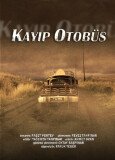
C.K.: Let’s turn to the documentary/film “The Missing Bus.” It is a work that began with one of your poems, which was first made into a lament, then a music video for that lament, and later conceived as a documentary/film. I’m curious to know when and with what feelings you wrote the poem.
R.P.: The lament we’re talking about is heard at the end of the film. The song is actually an expansion of the poem, and the song was then expanded upon in the documentary. It’s a special documentary! You feel those emotions as you watch it. As you know, the passengers of the missing bus were found in Larnaca 42 years later! The moment I learned from the newspapers that they had been found, I was overcome with incredible emotion. As children, we had waited impatiently for the missing bus to return. It was part of our childhood. As for how the poem came about, there was a wedding that evening. My wife was unwell, and since it was being held nearby, I walked there alone. The poem came to me during that walk; it also had a particular melody—it was a lament…
C.K.: So it was an emotional poem that came to you in that moment…
R.P.: Actually, it’s no different from the other poems I’ve written! The only difference was that the timing was right: the missing bus, which had been awaited for years, had been found, and a lament needed to be sung for its passengers. I felt it was my responsibility to sing that lament. We began working with the musician Ahmet Okan to arrange the lament, which had both lyrics and a melody. With my brother Fevzi Tanpınar’s involvement, we added the visual element as well. We wanted to complete all this work quickly and have it ready by May 13, 2007, because the missing bus had disappeared on May 13, 1963…
C.K.: In the end, your idea became a reality, and the premiere of the documentary/film “The Missing Bus” was held.
R.P.: Yes. I’d like to add something here. The poem is entirely a poem from my childhood. It is not the work of the person I am or the thoughts I have today. It was written with the feelings of those years, from a child’s perspective. For that reason, it is a poem without the details that adults would include.
C.K.: What kind of response have you received?
R.P.: There is a sincerity in the documentary, and everyone who took part expressed their feelings. The poem provided the occasion. Pains that had been hidden for years—pains known only to certain people—were shared more broadly.
C.K.: A moment ago, you said it was “a poem without the details that adults would include.” Yet a very important documentary/film emerged from a poem without many details. This shows us that even a poem with few details can pave the way for a documentary, and that in turn demonstrates the importance of this art form. What would you like to say about your own art?
R.P.: Fundamentally, I came into my own as a poet. I reflect that in my life, too. I try to do everything by starting from poetry. At first, I wrote only poems. After a certain point, my poems began to grow longer. They became long poems, and then I looked up and they had become epics. Some of my poems became dialogues between people, and then I looked up and they had become plays.
C.K.: Do you have any that became novels? (We laugh.)
R.P.: I started out with poetry again, then I looked up and it was prose—a novel. “Gelincik,” for example, is that kind of novel. There is a dilemma in art: art for art’s sake, or art for the people. This is a dilemma that is constantly debated. When people reach a certain age, they think about this dilemma again: if art is to be made for art’s sake, artists can get together, practice their art, and applaud or criticize one another. Is that the true purpose of art? The main purpose of my art is to convey the feelings experienced by my own people—to the extent that I can—to future generations and to other societies.
C.K.: Where would you like to see “The Missing Bus” shown internationally?
R.P.: The way “The Missing Bus” is edited and its screenplay do not go into detail. If you go into detail, people who are unfamiliar with the subject may misunderstand it or find it difficult to understand. I think I’ve created a work that can be easily understood wherever this documentary is shown. Of course, I’d like “The Missing Bus” to be shown in other countries. But I’d also like it to endure for future generations.
C.K.: What are the goals of “Pertev Brothers Production”? In other words, what will your next projects be?
R.P.: “The Missing Bus” is a film made with almost no budget; it wasn’t a planned or scheduled project. First of all, I want “The Missing Bus” to complete its tour of North Cyprus. We’ll shape what comes next based on the responses we receive during that process. I had second and third projects in mind, but for now I want to get a sense of how society perceives “The Missing Bus.” However, what my heart is set on as the next step is a feature film.
C.K.: I know you don’t have much time. Finally, what would you like to say?
R.P.: In my view, the journey of the Turkish Cypriot people on “The Missing Bus” is still under way. We still haven’t reached anywhere. In other words, it is a journey that began with the events of 1963 and the violence that followed, and from which we still have not returned amid applause. The responsibility that falls to us—that is, to the children of those days—is to bring this journey to a safe conclusion. We must not leave it to the children of today.
I’d like to thank the Turkish Cypriot people for the interest they have shown.
C.K.: Mr. Pertev, thank you very much.