A return to 1982?
Does this mean this country will once again have to live through days without cinema?
We are upstairs at the Mısırlızade cinema.
All around us are film reels and history.
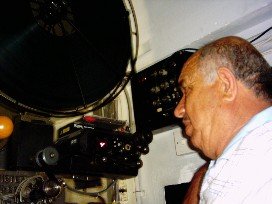
Right in front of me is someone who has devoted most of his life to this work, loved the machine he uses from the moment he first saw it and never parted from it, and observed the last 50 years of the Turkish Cypriot community’s relationship with cinema!
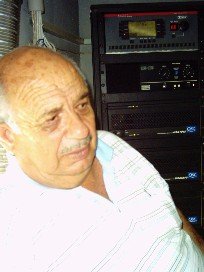
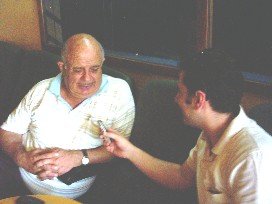
I’m interviewing Halil İnönü.
Halil ağabey, who has been in this sector since 1959 and is, so to speak, the doyen of this line of work in our country, draws on his experience and love of cinema to issue a very important warning: “If the government does not take immediate measures to prevent piracy and the sale of CDs/DVDs, we could go back to 1982, and this country may once again have to live through days without cinema,” he says.
I did a little research in response to Halil ağabey’s warning and found figures that make it painfully clear just how difficult things are for the cinemas. At some “lucky” theaters, films are being screened for just three to five people! We all know very well how quickly people in our country can get hold of the films showing in our theaters—as easily as buying melons or watermelons. As a result, the fact that sales that are illegal everywhere else in the world are legal in our country naturally makes things difficult for those who earn their living from this business. But do you think the fact that this sector is struggling concerns only the people who work in it? Of course not… The situation Halil ağabey describes is already the answer to that question. A reminder for those who have forgotten: in 1982, just as today, pirated videos were a hot topic, and theaters that were once again going through hard times were forced to close. They remained closed for 13 years; for 13 years, this country lived through days without cinema. When the cinemas reopened 13 years later, young people who had never been to a cinema had to check behind the screen, asking themselves questions such as: “Is there a tube behind it? What kind of television is this?” Unless measures are taken, this country will be deprived of cinema, the most influential branch of the visual arts, which left its mark on the 20th century and is shaping the 21st. I wonder: if we end up in such a situation, who will be held responsible? I’d like to end this discussion with the words of the Great Leader Mustafa Kemal Atatürk: “Cinema is a turning point for the world of the future. Radio and cinema, which now seem to us to be simple entertainment, will change the face of the earth within a quarter of a century. A woman in Japan and a Black person in America will understand what an Eskimo is saying. In terms of preparing a single, united world, events that ushered in new eras in history—the invention of the printing press and gunpowder, and the discovery of America—will be no more than toys compared with the invention of cinema and radio.”
The reason I’ve written all this is the very near future Halil ağabey has pointed to: cinema theaters reaching the point of closure… The first 15 minutes of our interview were about the subject I’ve tried to summarize above. If I had to sum up my impression in a single sentence, I’d say that, as the saying goes, “things have reached the breaking point” in this sector.
Now, let’s move on to the interview:
Cem KAR: Halil ağabey, do you remember the first film you saw?
Halil İnönü: The first film I saw was “Şimal Yıldızı,” starring Ayhan Işık. At the time, there was an Armenian filmmaker on the Greek Cypriot side, and I saw it there. I was so keen on cinema that every week my father would give us money and we’d go to the movies.
C.K: So, how did you get into this line of work, and what was the first film you screened after becoming a projectionist?
H.İ: When Taksim cinema opened—the summer cinema in the Çağlayan area—we started going there. Of course, I was so curious that I’d set my mind on working at a cinema, even if it was just as an usher. I started working as an usher at the “Taksim” cinema in 1959. But my eyes were fixed upstairs, on the projection room. The projectionist at the time realized how interested I was and took me up to the projection room. He said to me, “You seem really interested in this. Would you like me to teach you?” He took me under his wing and trained me. Later, when he left the job, the owner started saying, “Oh dear, this won’t do. What are we going to do?” I told him, “Don’t worry, I’ll do it.” The first film I screened was “Taş Bebek,” starring Gönül Yazar. That film was how I got started as a projectionist.
C.K: What was happening in cinemas back then? What did you observe?
H.İ: From 1959 to 1963, the cinemas were doing well. In those days, they showed two films: one Turkish and one American. We got the American films from the Greek Cypriots. In 1963, because of the well-known events and the displacement that followed, among other things, the cinemas remained closed for a while. We started running the cinemas again in 1965, but business wasn’t what it had been between 1959 and 1963: people coming from the villages and surrounding areas couldn’t get to the cinema because of the barricades.
C.K: Did the barricades make it difficult for you to bring in films?
H.İ: When films arrived at customs, the Greek Cypriots would confiscate them and send them for censorship. It was very difficult to get national films and the like through. But I’d found a way. I’d go to the airport and exchange the film I wanted for another film I took with me, paying a certain amount in bribes. For example, I got Yılmaz Güney’s film “10 Korkusuz Adam” through using the method I described, by paying a police officer there 5 Cyprus pounds, and then screened it. It wasn’t the film we’d had brought in that went for censorship; it was the romance film I’d taken there. We got three or four films through this way. People were very interested in national films back then; there was already oppression, and everyone was a soldier or a mujahid.
C.K: How did things get to 1982?
H.İ: From 1974 until the 1980s, films like the ones Ferdi Tayfur made—“Çeşme” and so on—did very well. Then video came along, Yeşilçam went under, and we went under with it. In 1995, thanks to Ertan Birinci’s truly great dedication and courage, the cinema sector came back to life in this country. You wouldn’t believe the places we found machines and the repairs I did. After all the struggle it took to revive this sector, today it’s battling CDs and DVDs, just as it battled the video craze of the 1980s. Turkey took measures to deal with this, and their sale is banned there. But there’s no such ban in our country!
C.K: Unfortunately, that’s true… Let’s go back to the past. Is there a memory from those years that has stayed with you?
H.İ: I don’t remember the exact date, but it was during the summer, and there was a film called “Altın Kafes.” The cinema was packed every day; there were crowds everywhere. Films in those days were made from flammable film stock. In other words, a small spark—even the flame from a cigarette—could set the entire film alight in a very short time. It was made from a material that could catch fire instantly, like gunpowder. There were people everywhere—in the projection room, on the roof, at the doors—and people were smoking. And because we were showing flammable film, I couldn’t leave the room. The film ran for a full week, and in that hot weather I was drenched in sweat inside the room. You know the saying, “The milk I suckled from my mother came out through my nose”? Well, I experienced that firsthand.
C.K: You’ve followed the cinema sector very closely over the last 50 years in Cyprus. Which film had the longest run?
H.İ: “Titanic.” It played to sold-out audiences for 11 full weeks, and if you didn’t buy a ticket a week in advance, you couldn’t get a seat. That’s a record in Cyprus! I’m telling you honestly: if we got a copy of the film and brought it here, it would still do well today. By the way, I have a memory about this: “Tempo Tv,” which was broadcasting at the time, got the film and showed it on television. —Let me add a brief note on this: While the television channels in our country don’t show films that are still in theaters, “Akdeniz Tv” continues to show them. In fact, the other day they showed “Little Man,” which we haven’t even released yet.— A friend of mine had seen “Titanic” on television and came to the cinema to return the tickets he had bought earlier. When he couldn’t find me there, he said, “Since I’ve got a ticket, I might as well go in and watch it.” He came over to me during the interval and said: “But I couldn’t find you. What television? I’ve never seen anything like this in my life, never experienced it, never been so moved. The creaking of that ship, the sounds coming from everywhere—I watched it on television last night, but it wasn’t like this.” That’s the point: a film is meant to be seen in a cinema, not somewhere else. Can you get this effect on television? No way!
C.K: Well, Halil ağabey, what would you like to say in closing?
H.İ: The greatest pleasure for those of us who work in the cinema sector is showing a film to a full theater. When the theater is full, the projectionist starts the film with even greater pleasure. In that situation, everyone is happy. Today, because of piracy in our country, we’re having difficulty getting films from American companies; and even when we do get them, for the same reason, we can’t make money at the box office. I can keep doing this work for another year or two; the money it brings me doesn’t matter. But seeing cinemas close in this country and this culture being destroyed makes me very sad, as someone who has devoted many years to this sector. The problem has now reached very serious proportions, and unless the government takes immediate measures to prevent piracy and the sale of CDs/DVDs, we could go back to 1982, and this country may once again have to live through days without cinema. I don’t think any of us would want that to happen.
C.K: I hope someone takes what you’ve said into consideration and this major problem facing the sector is resolved. Thank you very much for this pleasant conversation.
H.İ: Thank you.