At a time when everyone was saying that films could not be made in the TRNC, he put his name to a project that addresses a much-needed subject and answers the question, “How should we tell the world about ourselves?”
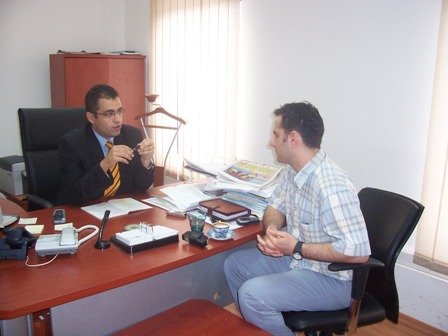
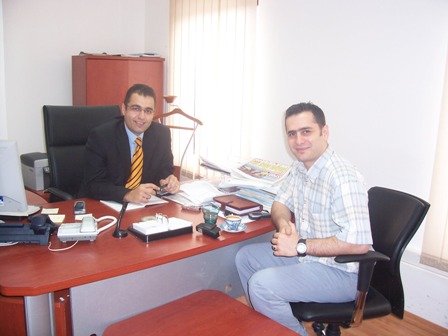
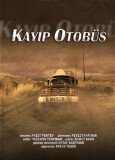
Yes, this week my guest is Fevzi Tanpınar, director of the documentary film *The Lost Bus*, which had its Nicosia premiere a few days ago!
Without further ado, let’s get to the interview…
Cem KAR: I always ask the same first question in the interviews for the Once Upon a Time series: What was the first film you watched?
Fevzi TANPINAR: The first part of my childhood was spent in Larnaka. I was eight when we left Larnaka after the Happy Peace Operation. My family used to take me to the movies when I was very young. Naturally, I heard about my earliest cinema memories—which I can’t remember—from my family. Let me tell you something I heard from them about this: When I was one or two years old, the family went to the cinema, and naturally I was in my pram. In the dark, I somehow managed to take the pram somewhere it shouldn’t have gone—and how I managed that, I don’t know—and then I got out by dismantling the front of that fancy, lace-trimmed pram and lay down in front of the cinema screen (we laugh…).
Apart from that, what I vaguely remember from childhood about cinema is the film set Tarık AKAN put up in Larnaka to shoot a film: the preparations, the excitement…
After leaving Larnaka, we moved to the Lower Varosha area, where I spent a significant part of my childhood. The first film I clearly remember and understood, I watched in a cinema inside the walls of Famagusta. It was Yılmaz Güney’s *The Herd*.
C.K: So what made an impression on you: the film set Tarık AKAN put up in Larnaka, or *The Herd*?
F.T: *The Herd*. I must have watched that film dozens of times, and each time I took away something different. It’s a film that affected me deeply.
C.K: For many years, you held very important positions at a number of major media organizations in Turkey. As far as I know, you also had experience directing during those years.
F.T: It isn’t easy to establish yourself in Turkey! I worked at Cumhuriyet and Güneş newspapers. My first television experience was with Magic Box, and later I continued with Star. I served as a correspondent in Athens for four years. While I was there, I studied television. After that, I directed many programs from time to time. During this period, I made the documentaries *Sultan Ahmet Prison* and *The Journey of Tea*. I gained a lot of experience in bringing subjects to life visually.
C.K: Let’s talk about *The Lost Bus*! To be honest, I’m very curious about how the documentary got started.
F.T: *The Lost Bus* is a poem written by my older brother, Raşit Pertev. It began when musician Ahmet Okan and Raşit Pertev came together with the idea of turning the poem into a lament. While they were working on the lament in a room, I happened to go in. (It was a subject we had known very well since childhood, anyway.) When I heard the poem and music at that moment, I thought the subject could have an incredible visual impact. The first words out of my mouth were, “Let’s make a music video for this.” A few minutes later, we started saying, “Let’s make a music video, but let’s also make a documentary about it.” In fact, if we’d had more financial resources, the subject could have become a feature film. In the end, that’s how the documentary’s journey began.
C.K: What was the impact that excited you so much and made you think of making a feature film if the resources were available?
F.T: The depth of the subject brought us to this point. It was a very powerful subject that could be explored in terms of universality and scientific rigor. By scientific rigor, I mean both carrying out the work at a professional level and having the ability to present the subject in light of all the facts, without distorting anything. As for universality, watching this documentary brings a picture into focus. If viewers can see the same picture, that is actually the most rewarding stage for a director. As we brought this picture into focus, we also shed light on a period: What did Turkish Cypriots experience in the 1960s? What were the living conditions of Turkish Cypriots in Larnaka? It was a light that emerged through accounts of what the relatives of the 11 passengers on that bus went through… We managed to do this well and accurately.
C.K: Could you explain a little more about the subject’s universality?
F.T: Whoever watches this documentary, wherever in the world they are, will be able to understand it. We made a documentary that is understandable and means something even to someone who knows nothing about Cyprus. That’s because we dealt with a bus and a disappearance, both of which are universal. We put the shared grief experienced everywhere in the world at the heart of the film: the pain of losing someone close to you without even knowing what happened to them. It is a pain worse than death; the uncertainty is always there, disturbing and unsettling you. That’s what I mean by universality.
On the other hand, what excited my team and me, and inspired us to make such a selfless effort with an amateur spirit, was our sense of gratitude and appreciation toward our people. That feeling spurred us on. We were trying, in our own way, to bring to light a subject that had not been told until now and had been left incomplete. This sense of gratitude and appreciation motivated us.
C.K: The general view in our country is that this kind of work can’t be done using our own resources. What kinds of problems did you encounter? Did you have technical difficulties?
F.T: First of all, I must say that anything can be done in our country! Of course, technically, we don’t have a certain level of infrastructure. When making this documentary, we didn’t disregard international standards. We used entirely digital systems and film techniques. Yes, we don’t have the infrastructure, but as we make more projects of this kind, we’ll all work together to close that gap. In making this film, we secured the necessary infrastructure with the support of my friends in Turkey, whom I’d worked with for years.
C.K: Could you tell us a little about your team?
F.T: A team of 44 people worked on the film, including the cast. None of the actors, who were all from Yeni İskele, were professionals. But they performed with incredible spirit, excitement, and a level of professionalism I couldn’t have imagined. First, we explained to the actors what we wanted to do. Once they understood, they brought what they felt to the screen with incredible spirit.
C.K: Looking at the world as it is today, almost everyone is trying to express their concerns, troubles, problems, and the pain they’ve experienced through the visual arts. Was this one of the reasons that drove you to make this documentary?
F.T: This documentary came entirely from a desire and a spirit that arose within us. It wasn’t organized with one person writing a poem, someone else composing the music, and then us making a documentary! This documentary emerged entirely through a process that developed on its own. Of course, as a professional who knows how to use the visual arts, and as a Turkish Cypriot, this desire has always been within me. In other words, I need to help bring to light what my community has experienced! That is one of the main reasons I came to Cyprus. I spent 20 years abroad. I always had it in mind that if one day I returned to my country, I would use everything I had learned here and contribute to my own country. I returned with that enthusiasm. But I can’t say I found the environment I’d hoped for.
C.K: So is this documentary a beginning?
F.T: This is a beginning! I went through a stagnant period; I’ve been here for more than four years. In Turkey, I held senior management positions at national television stations and put my name to many television programs. So I came here from very professional environments. The state of the media here is plain to see! Don’t misunderstand me; I’m not saying this to belittle it. I think we need to make an effort to improve the situation of our media organizations here as soon as possible. They have many problems, starting with financial ones. I wanted to begin with a series of works that could benefit my country. *The Lost Bus* is one link in that chain!
C.K: So there will be more to come.
F.T: We have a lot to tell! I emphasized this at the premiere, too: A country without documentaries is like a family without a photo album. In other words, we should fill our photo album as much as we can. But it shouldn’t be an album that only we leaf through; it should be the kind of album that draws the world in to look through it as well. The way to do that is to produce works that are universal, scientific, understandable, and of international standard. Anything else means nothing.
C.K: What does the future hold for *The Lost Bus*? In other words, using your analogy, will the world get to see the picture of *The Lost Bus* in our album?
F.T: First, *The Lost Bus* needs to complete its journey here. We are in discussions with some channels in Turkey. We’ll conclude this process in the coming months and grant them the screening rights for one year. After that, we’ll release the documentary on DVD for sale. Meanwhile, we’re receiving invitations from abroad, from the United States and European countries, and the film will have premieres there. We’re also planning premieres in Ankara, Izmir, and Istanbul after the elections in Turkey. We have prepared English subtitles for the film. The translation process is underway, and very soon we’ll also make German, French, and Greek subtitles. Those will be the future stops on *The Lost Bus*’s journey.
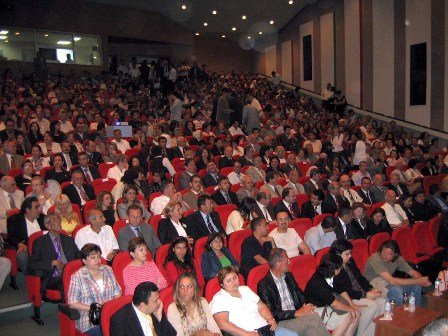
C.K: The strong interest in the premiere shows just how interested the Turkish Cypriot people are and how much they hunger for this kind of work. I’m sure you’ve noticed this interest too. So I expect readers of this interview will be keen to ask: What will the next project be? Let me ask on their behalf.
F.T: We have a lot of projects! Actually, this isn’t proof of how exceptionally talented we are! There are so many subjects in the country where we live that haven’t been explored and are still untouched. We haven’t been able to tell what we’ve experienced in this way, and we feel that hunger and that gap.
C.K: So there aren’t any pictures of us in the album!
F.T: Not at an international level! So all our colleagues need to get moving to fill that album. I hope *The Lost Bus* turns out to be the worst of the documentaries made from now on. As a director, I’ll look at it with a very sweet sense of jealousy, and that will give me pleasure, too. That’s how it should be. This friendly rivalry will drive us to do much better work.
C.K: Do you get requests or suggestions from citizens and friends? Things like, “Mr. Fevzi, we have a story like this, too.”
F.T: Families of the missing have shown a great deal of interest in the subject of missing persons! The number officially recorded as missing is 502, but there are also people who aren’t included among the missing. We’ve received many suggestions, both about missing persons and on other subjects. We plan to put them in order and film them as a series under the name ‘Pertev Brothers Production’.
C.K: A moment ago, you said, “I hope *The Lost Bus* turns out to be the worst of the documentaries made from now on.” Do you have any advice for those taking on this kind of work?
F.T: Who am I to give advice, but I can share a few thoughts. As I said at the outset, we can’t disregard universality and scientific rigor in any of our work. So if we make universality and scientific rigor guiding principles in every project, the work will be watched and assessed attentively around the world, and we’ll overcome the difficulties involved in communicating it.
C.K: Whenever we do something here at an international level, it naturally prompts a reaction from the Greek Cypriot side. Has there been such a reaction to *The Lost Bus*?
F.T: Nothing has caught our attention so far! Actually, that’s very telling, too! Because every project made up to now has drawn serious reactions from the Greek Cypriot side. They probably don’t have much to say about this subject, since nothing has come out so far. We presented events as they happened. Colleagues from the Greek Cypriot press were at the first premiere, but they didn’t say anything about the documentary, and that seemed very telling to us, too! I think we’ll see their response as the film has its world premieres and its impact grows. Besides, we didn’t make this to target anyone; we simply made something to tell the world accurately about what we have experienced.
C.K: One of our country’s biggest problems is piracy. What do you plan to do about it?
F.T: *The Lost Bus* is a film currently on release. In our country, too, television stations are unable to screen it, in line with a decision by the YYK (High Broadcasting Board). The copyright for our film was acquired in Turkey. All of our broadcasting organizations here have always been sensitive to this issue. We need the financial conditions to be in place before we can make a second documentary. That’s why we’re in discussions with broadcasters abroad about screening rights.
C.K: Finally, what would you like to say?
F.T: Finally, dear Cem, we need to make very good use of visual media as a tool. Communication is now carried out through the visual arts all over the world. Visual media makes it much easier for the other side to understand, and it also helps us reach much wider audiences. In the global competition in visual media, Turkish Cypriot visual media needs to occupy the right place and make good use of the visual arts. Cinema is undoubtedly at the forefront of this.
Another point I want to stress is that we are late in adding some subjects from our history to our visual archive. If I tried to make a film about any subject concerning Turkish Cypriots in the 1950s, the people who could tell us what happened in those years would have to have been 20 at the time. That means those people are now in their eighties! If we consider whether people of that age are still alive and whether they have difficulty remembering, we can see that we’re late; we need to hurry. If you set out to write a film script, you have no documents or footage at your disposal. The best example of this is *Titanic*: if there hadn’t been an interview with the person who survived, the film wouldn’t have attracted so much interest. So these kinds of interviews need to be conducted and recorded as soon as possible. I’d also like to thank our sponsors, Mesan and Ermataş; Yeni İskele Municipality, KTHY, and Merit for providing logistical support; and Mr. Debreli, the owner of the bus.
C.K: Mr. Tanpınar, thank you very much, and I wish you success with your future projects.
F.T: Thank you.