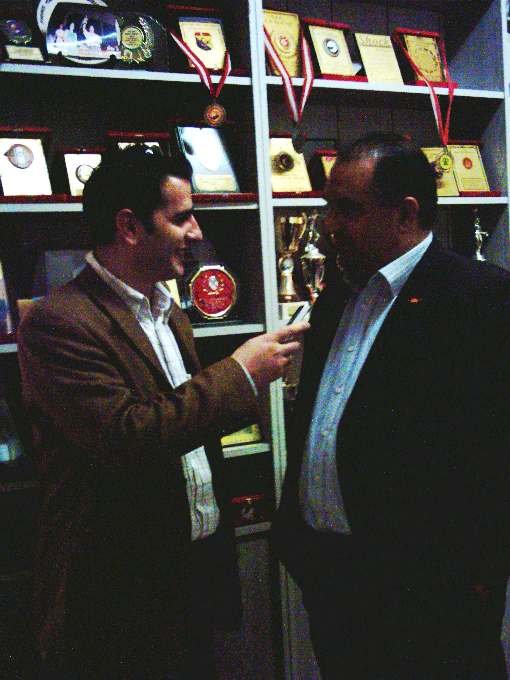
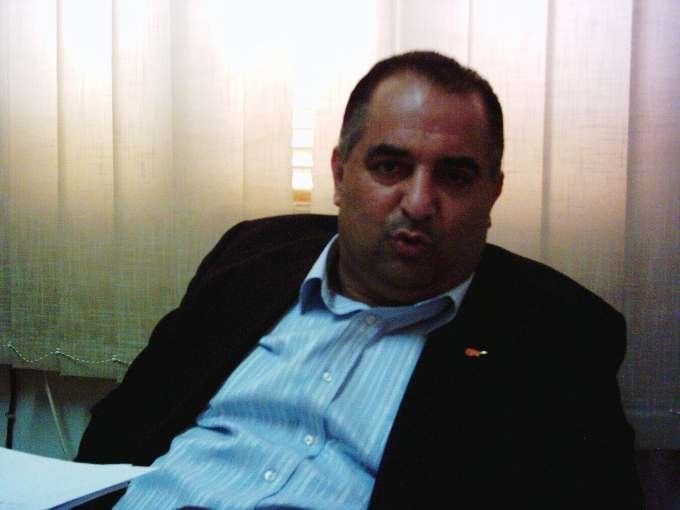
Readers who have been following my Once Upon a Time column will know that when I first started the series—that is, in the first week—I shared a few notes about the reopening of cinemas in 1995. In today’s interview, you’ll read about the man at the heart of this story. We had a very enjoyable and equally informative conversation with Ertan Birinci, who brought an end to the cinema-free days that lasted from 1982 to 1995. In the interview, you’ll travel back to the 1970s and eat basedembo, recall with sadness the cinema-free days of the 1980s, and remember the 1990s! By the way, I may have written the words ‘Belkola’, ‘babulap’, ‘pasadembo’ and ‘kafes’ incorrectly. I tried to write them as they sound, since I don’t know how they’re spelled. I hope you’ll forgive me for that. Anyway, without straying too far from the subject, let’s move on to the enjoyable conversation we had during the week…
Cem KAR: First of all, thank you very much for making time for me. Mr. Birinci, I’m curious: do you remember the first film you saw?
Ertan Birinci: I was very young, of course. Back then—in the 1970s—whenever Turkish films came to the cinema, everyone went with their family. There were two open-air cinemas in the Çağlayan area, in particular. That road was like today’s Dereboyu Avenue, but it was a road where hundreds of people went without cars—in other words, they walked. Everyone would meet there, walk beneath the cypress trees, and go on long, long strolls. The cinemas were always right beside us on those strolls—those walks. They were open-air cinemas, summer cinemas. We watched many films at those summer cinemas. We would see two films in one night back then. I remember when Turkish films came; we would go to them with great excitement.
C.K: So people watched two films in one sitting. Since that took a long time, did they have something to snack on between films?
E.B: We drank ‘Belkola’ and ‘babulap’, and ate ‘pasadembo’ and ‘kafes’. I mean, picture a man walking around with a tray at his waist. He sold cola and so on from the tray, and we’d have those things as snacks… One of the most important details about those days is that we played ‘dombula’ during the intervals.
C.K: You mean bingo?
E.B: Yes, yes, bingo… I’m saying ‘dombula’ because you’ve taken me back to those days… (we laugh…) Dear Cem, cinema was very important to us in those days. At the cinema, we learned to laugh together, cry together, and live and share together. —Cinema has that quality.— Cinema also mattered in terms of history and the national struggle! In those years, leaders delivered many of their messages in those cinema halls.
C.K: I suppose the halls were places where people came together, where the public gathered and many events were held.
E.B: Absolutely. The cinema halls of those years were places of national struggle. By the 1980s, there was the Şahin Cinema near the Vakıflar İş Hanı. That cinema was demolished, and the Vakıflar Cinema was built in its place. It was Cyprus’s first wonderful, modern, two-storey cinema, built to the standards of the time. It’s still there today, but it’s being used for other purposes.
C.K: Do you have any memories from those years?
E.B: We have many memories from those years. There were films we went to see as a family. But by family, I mean three or four generations together—films we watched as an entire extended family. What I saw at those screenings was a community of people who brought watermelon and halloumi to eat in the halls, and who were together in a spirit of unity, togetherness and warmth. We are a generation that had the chance to go to the cinema halls in those years.
C.K: Yes, the cinema halls closed before the mid-1980s. Or, as we know, they had to close for various reasons—because of the wave of sex films. Then, in the 1990s, you took on the initiative to open a cinema, which many people called “a great act of courage.” What made Ertan Birinci say, “I’m reopening the cinemas”? Did those memories play a part?
E.B: 1994 was the 100th anniversary of cinema. That had a great impact on me, and that year I was watching the Antalya Film Festival on television. I was also influenced by the fact that my father-in-law was a theatre artist and had great regard for cinema… In the centenary year of cinema, there wasn’t a single cinema hall in the TRNC! It was terrible. I said to myself, “I’ll do this as a cultural service through the Meral Birinci Foundation, which I established in my mother’s name after losing her in 1992, and cinema will return to the TRNC.” When I announced my decision, many people laughed at me. They said, “Will there really be a cinema? There are videos, and new things are coming out all the time. Who’ll go? Who’ll watch?”
C.K: So you received a lot of negative reactions.
E.B: Yes, I received a lot of opposition. And there was no hall, no projector, no films—nothing! But I had faith… First, I went and knocked on Mrs. Rana Mısırlızade’s door. The Mısırlızade Cinema was the only hall that could be made ready to show films quickly. It was a place like a storeroom, full of all kinds of things. Mrs. Rana hadn’t rented it to anyone. When we knocked on her door, she welcomed us with a mother’s tenderness, and we came to an agreement. Ali Süha Bey—her husband at the time—was also a great help to us. In the end, we rented the cinema. I knew Halil İnönü from when I was very young. He had run the old Şahin Cinema and was an experienced projectionist. I went to him, too. When I explained the situation, Halil ağabey’s eyes filled with tears, because he hadn’t been able to practise his profession for more than 10 years! He took me by the arm and said, “I’m with you, too.” We travelled around all the villages looking for a projector. We collected cinema projectors from Güzelyurt, Vadili and Beyarmudu, and brought people from Turkey to repair them. That gave us two projectors. The only thing left was to get films! My father-in-law knew director Ünal Küpeli very well. Halil Bey, my father-in-law and I went to see Mr. Ünal in Istanbul. He took us to Warner Bros. The company representatives welcomed us with great interest, but Cyprus was not recognised, there were no copyright protections, and piracy was widespread… So we provided the necessary guarantees and made an agreement for the films. That was also a milestone, because films from American companies would be coming to the TRNC, and we would show films at the same time as cinemas in Europe. That was very important… And on 13 January 1995, we opened the cinema to a huge crowd. The first film we screened was *The Flintstones*. After that, we built a small, pocket-sized cinema inside the Mısırlızade. I named the main hall the Osman Mısırlızade Hall and the pocket cinema the Meral Birinci Hall—to keep those people’s names alive. Then we brought all the halls in Kyrenia, Famagusta and Güzelyurt back into operation and opened a summer cinema. We sold 60,000 tickets in three months. People even came to tour the halls as if they were museums!
C.K: Ahmet Tolgay said the same thing in an interview I did with him about this: when the halls opened, children would look behind the screen to see if there was anything there…
E.B: Yes, they’d look behind the screen and ask, “Is this a television? Does it have a tube?” Cem, I watched my last film at the Vakıflar Cinema I just mentioned. By then, 13 or 14 years had passed, from the 1980s to 13 January 1995… That means a child who was five when the cinemas closed would have reached university age by the time they chose to study cinema—and if they had never left Cyprus, they would never have seen a cinema. In other words, they would never have been to the cinema in their life. Can you imagine? That’s why people toured the hall as if it were a museum when it opened. Children came out of curiosity, and those who missed the cinema came because they longed for it. I’ll never forget: in a hall with 760 seats, where we had three screenings a day, we issued 850 tickets for each screening.
C.K: That’s an incredible number!
E.B: Of course… We had lost 13 or 14 years, and we wondered how we could make up for that loss. We decided to hold a film festival. We brought in for the festival the most important films that had been made during those 13 or 14 years but had never come to Cyprus. In the end, on 17 May 1997, we held the 1st TRNC Film Festival. We had a teacher, Ms. Zuhal Çetin, who made a huge contribution to the festival. Famous names also took part: Kadir İnanır, Halil Ergün, Fikret Hakan, Atıf Yılmaz—may he rest in peace—Derviş Zaim, when nobody knew him, Hıncal Uluç and Hande Ataizi. As part of the festival, we also held three panel discussions. After that, we published two books. We asked our dear ağabey Ahmet Tolgay, who was devoted to this work, and he wrote them. These books shed light on the cinema history of the Turkish Cypriot community and are encyclopaedic in nature. In the end, we did more than just open a cinema hall: we held a festival, along with panel discussions, published a book, and also opened two exhibitions about Turkish cinema posters and photographs. In 1999, when the cinemas ceased to be a cultural service and became commercial, we handed them over to companies that are successfully running the business commercially today. With the aim of doing it even better and developing it further, they are carrying the cinema sector forward in the best possible way.
C.K: Our country has no copyright law, and this is causing major problems. What would you like to say about this?
E.B: Anyone who has no respect for an artist’s art and work has no self-respect. Societies that show no respect for this cannot progress! If we want to progress, show respect and be respected, we must say no to piracy. The law needs to be passed, but it’s not just about the law! You mustn’t broadcast something that is copyrighted as if it weren’t. That awareness needs to take root.
C.K: You at Genç TV pay attention to this, don’t you?
E.B: Nobody can say they’ve seen a film that’s showing in our cinemas on our channel. Besides, we have a responsibility in this regard: we were the ones who brought cinemas back to the TRNC after all those years. We can’t show these films on television—and we wouldn’t show them anyway!
C.K: Well, Mr. Birinci, what would you like to say in closing?
E.B: Cinema is a very important place where people cry together and laugh together. A few months ago, my father-in-law, my mother-in-law, my wife, my children and I—in other words, three generations together—watched *My Father and My Son*, and we all cried and laughed together. You can’t get that same enjoyment from television, DVDs or anything else. So let’s go to the cinema, support cinema and watch films in the cinema. There’s Sinekritik on Genç TV, and your page is also called Sinekritik. I follow it regularly. It’s wonderful that you’re devoted to this kind of work and contributing to it. I congratulate you and thank you.
C.K: Thank you very much, Mr. Birinci…
E.B: Thank you. Best of luck with your work.