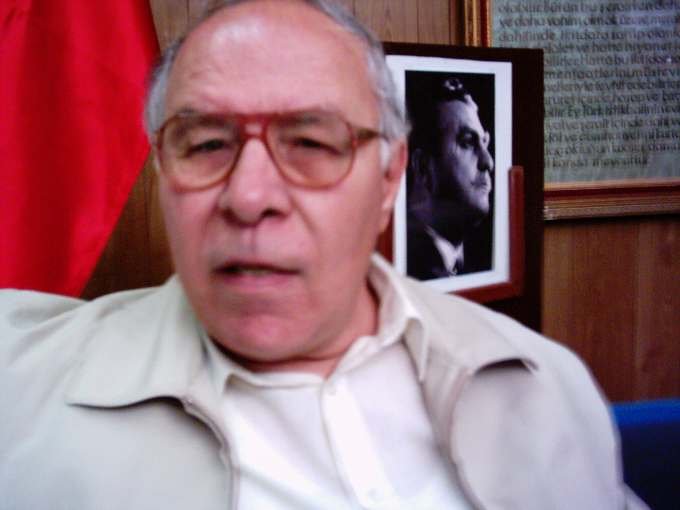
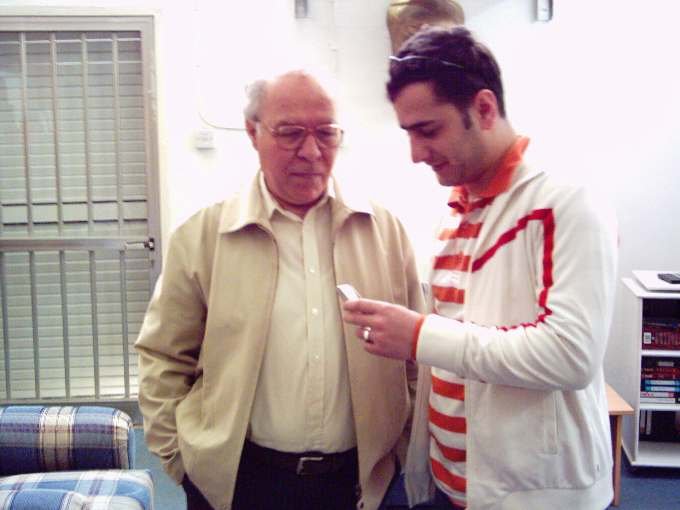
This week, I am publishing an interview I did with Ahmet Tolgay, a senior journalist and someone who has worked for years to promote cinema culture. When I called to ask him for an appointment, I said to him over the phone: “Brother Ahmet, I’m doing interviews about cinema, and it would be a great omission for me if you weren’t among them.” Yes, indeed, it would have been a great omission not to include Ahmet Tolgay in this series of interviews, and he made time for me out of his valuable schedule. Thank you, Brother Ahmet, for this pleasant and informative conversation.
Cem Kar: Mr. Ahmet Tolgay, first of all, thank you for making time for me. I’m curious: where did you see the first film you watched, and what was it?
Ahmet Tolgay: The first film I saw was a ‘Tarzan’ film starring Lex Barker. Of course, at that time, Turks did not have their own cinemas, but, interestingly, there were two Greek Cypriot-owned cinemas in Baf: one was called ‘Titanya’ and the other ‘Atikon’. Both were built on land belonging to Turks, on land owned by the foundations. Around that time, Turkish films, as well as American ones, began arriving in Cyprus. When they did, Turkish distributors rented Greek Cypriot cinemas and showed the Turkish films there. In fact, when we came to Nicosia, we saw the same thing happening there. Since Turks had no cinemas of their own, Greek Cypriot cinemas were rented (usually the ‘Macit Palas’ cinema, which was close to the Turkish area…) and films of this kind were shown there.
C.K: When did cinemas belonging to Turks open?
A.T: Because Turks were so passionate about cinema, it did not take long for us to have our own cinema. At the end of the 1950s, the Zafer Cinema, founded and built by an Armenian, was bought by the Boyacı family, and so Turks had their own indoor cinema. Before that, there were open-air cinemas in the Çağlayan area. They belonged to Turks, but screenings were held only during the summer. In winter, people went to Greek Cypriot cinemas because there were no indoor venues. Zafer Cinema filled that gap: thanks to it, Yeşilçam films continued to be shown during the winter months, too. Two different films were shown in two screenings. First, an American film would be shown—usually a Western. In fact, it was almost as if no films other than Westerns were coming in—and then a Turkish film would be shown.
C.K: On which days were the films shown?
A.T: Screenings of new Turkish films began on Wednesdays and continued through Sunday.
C.K: What happened on Mondays and Tuesdays?
A.T: In those days, there was a big attraction for women: they were admitted to the cinema free of charge. Men were charged a lower price, too. Our currency at the time was the shilling, and on those evenings it cost men half a shilling to get into the cinema. So when women went with their husbands, the whole family could watch a film for half a shilling.
C.K: What did cinema mean to Turkish Cypriots?
A.T: In those days, cinema had become a passion for Turkish Cypriots, but it has to be said that people had no other entertainment either. You know İbrahim Tatlıses’s famous saying: “If there had been an Oxford in Urfa, do you think we wouldn’t have gone?” It was something like that. Of course, this entertainment, which people had little choice but to turn to, had an enormous impact on the education of our people. Especially during periods when we were cut off for political reasons, cinema became a window onto the world for the Turkish Cypriot people. Thanks to cinema, people emerged who knew America very well. For example, the places where Westerns were set—Texas and the Wild West—were very familiar to us. Of course, those films were shot in studios.
C.K: What was the impact of Turkish films?
A.T: Of course, this influence did not come only from American films. The films arriving from Yeşilçam also taught our people about Anatolia and Istanbul. In the past, there was not as much travel back and forth between Turkey and Cyprus. People who could not go to Turkey, see those places, or learn about Turkish culture gained that knowledge through Yeşilçam films. I always say that it was these films that helped Turkish Cypriots develop their Turkish.
C.K: We’re a people with a strong interest in cinema, aren’t we?
A.T: The Turkish Cypriot people have a great passion for cinema; however, our people are generally viewers. Despite this passion, it cannot really be said that we have produced much in the way of cinema. But serious work is being done in this area lately. The best-known among those involved is Derviş Zaim. He is a director who emerged from the Turkish Cypriot people’s passion for cinema. In a conversation I had with him, he said that, even as a child, he would regularly go to the cinema with his family. That passion for cinema made him a filmmaker who has achieved international renown.
C.K: What was the impact of national films during the years of struggle?
A.T: At the time, the British colonial administration had banned flags in an effort to suppress nationalist sentiment on both sides. They were doing everything they could to stifle national feeling. National publications from Turkey were not arriving. Flying the flag was prohibited. Films coming from Turkey—even films that were not nationalistic—were censored if, for example, a small flag appeared on a ship sailing through the Bosphorus. But Turkish distributors came up with a way to get films past the censors: they screened the films in advance and cut out any such scenes. They then submitted the films to the censors that way. Once the films had passed censorship, they put the cuts back in and released them for screening. When a Turkish flag appeared on screen, or even a Turkish soldier standing guard, the cinemas would erupt in a tremendous wave of excitement, applause and cheering. Showing these films in cinemas was prohibited; nevertheless, they helped foster national sentiment among the Turkish Cypriot people. The hunger for this was so intense that even the chance sight of a small flag would get the entire cinema on its feet. Our cinemas took great care to show films of this kind, especially on national days. In short, these films played a very important role in strengthening and advancing the Turkish Cypriot people’s national struggle.
C.K: Can we say that these films made a major contribution to morale and motivation?
A.T: They certainly did. No one can deny that.
C.K: Films undoubtedly play a very important role in our lives. Is there a film that affected you and shaped your life?
A.T: I am constantly under the influence of films. But if we single out just one film, we would be doing the others an injustice. For example, the classics have had a great effect on me. Films like ‘Dr. Zhivago’, ‘Lawrence of Arabia’ and ‘Casablanca’ affected me greatly. From more recent times, ‘The English Patient’, a highly emotional film, is also important to me. These are films that affected me; I cannot say that they shaped my life directly, but they had a great impact on my feelings. The films made by important Turkish directors such as Metin Erksan, Atıf Yılmaz, Ö. Lütfi Akad and Memduh Ün had a huge impact on me. I could say that we learned about Turkey’s realities—and even universal realities—through those films. We received from them an education we could not get at school or from books. The power of visual storytelling is enormous!
C.K: Was there censorship between 1960 and 1963?
A.T: At the time, there was a joint Republic, and there were Turkish members on the censorship board. So I cannot say there was censorship or pressure on national films. Generally, films with sexual content were censored. But the real pressure began after December 1963—after the Greek Cypriots put the Akritas Plan into effect and the Republic collapsed—and Turks were confined to enclaves. In those days, films from Turkey entered our areas under Greek Cypriot control, and that was when severe pressure started again. The Greek Cypriots banned films with nationalist content from entering Turkish areas because they did not want Turkish Cypriots’ national feelings to grow stronger. Despite this, films brought in by various clandestine routes, hidden in suitcases and luggage, made their way into Turkish areas and were shown in cinemas. Quite a few films with national content were shown this way! This was also the period, after 1963, when Turkish Cypriots became most attached to cinemas. Things reached such a point that some cinemas showed three or four films back to back, and people would bring their meals and spend hours there. Meanwhile, the companies importing foreign films belonged to Greek Cypriots, and they made good money from this. We got our foreign films from them. A Turkish film was never shown on its own. It was always paired with an American film imported by the Greek Cypriots. In fact, films would make it across to the Turkish side even on days when nothing else was allowed through from the Greek Cypriot side; an arrangement like that had been made. The films were shown freely on this side through special couriers, then sent back. Those distributors trusted Turkish cinema operators. So, even when there was no agreement on anything else, and not even medicine was allowed through to this side, there was cooperation in the area of cinema in those years.
C.K: Let’s go back to 1982: cinemas had closed, porn films were everywhere, piracy had run rampant, and there was a lack of cinemas. How do you analyze that period?
A.T: As you know, the television and video boom began in the early 1980s. As a result, cinemas were empty. The cinemas had to make a move in response. They adopted an approach of programming films that television could not show. What kind of films were they? Porn films. Men and young people were drawn to them, while families—the backbone of cinema—stayed away. When families stopped going to the cinema, the venues took an even bigger hit. These films also imposed a very misguided kind of sexual education, and families naturally objected. As families began to voice their objections, cinemas started closing, partly because of television and video, of course. There is another factor here: in those days, cinemas had no choice but to show porn films. No other films were being made at the time. And the reason those films were being made was, again, to compete with television.
C.K: You write about cinema. What were you doing in those years, when the cinemas were closed?
A.T: In those years, just as I do now, I devoted one or two of my articles each week to cinema. I consistently argued that cinema culture should be restored to society. I never stopped writing film reviews, either. The cinemas were closed, but I would write reviews of films I had seen on video and tell readers where they could find the tapes. So, even during the period when we were deprived of cinema, Ahmet Tolgay continued to write about it.
C.K: And in 1994, the cinemas reopened. How did that come about?
A.T: Eventually, Ertan Birinci stepped in! Through the Meral Tekinci Foundation, which he founded in his late mother’s name, he decided to restart the cinema movement in our country. It was a very bold decision, and it carried considerable risks. I still remember that when he opened the cinema, he came out and said boldly, “Our older brother Ahmet Tolgay is the one who motivated us in this regard. We were constantly influenced by his articles. In our conversations, he always encouraged us.” And with the film ‘Stone Age’, cinema culture returned to our country in 1994. Our people had gone back to an old love. People were organizing buses from villages to go and see the films. In those years, when children saw films on the big screens, they were amazed and would go behind the screen during the intervals, wondering, “Is there a theater play going on back here?” Because the cinemas had been closed for years, children had never been introduced to cinema. They did not know what cinema was. They had seen films only on television screens.
C.K: When will we become producers?
A.T: I believe Turkish Cypriots will make their own films, too. They will reach the world with their own films. Making our own films is very important! Cinema is the only means by which the people of Cyprus—abandoned in one corner of the island and made to suffer under embargoes and isolation—can introduce themselves to the world. Of course, cinema is not a cheap art form. If this is to happen, the state needs to provide substantial support. I have always been astonished that this issue has been pushed into the background until now. I have written about it in many of my articles, too.
C.K: Now, too, piracy is cinema operators’ biggest problem. Films are shown on television before they come out in cinemas, and they are put on sale in shops selling CDs and DVDs, dealing a major blow to the cinema industry. In a way, we are facing a return to 1982. What is your view of this issue?
A.T: Of course, our cinema movement is facing a very serious threat today as well. I fear that if this threat is not stopped, our cinemas may close again and our people may once more be left without cinemas. I call this threat “piracy.” When people see films on television, they say, “Why go to the cinema when they show them on TV anyway?” This expectation puts cinemas in a difficult position. The Higher Broadcasting Board (YYK) has made a decision on this matter, and films will no longer be allowed to be shown on television; but this measure applies only to television. Meanwhile, the sale of pirated CDs and DVDs continues. This is something that should not happen in a state governed by the rule of law. The relevant state agencies must step in and immediately collect those DVDs. I have not seen any action on this issue. As someone who cares about cinema culture, I believe the state must take the necessary measures against pirated CDs and DVDs immediately.
C.K: What would you like to say to the people who will read this interview about this issue?
A.T: Cinema is such an experience that the best way to enjoy it is in a cinema. No screen can give you the pleasure of watching a film together with other people in a cinema. Cinema is about sharing. You laugh together and, when the time comes, you cry together. You discuss the film during the intervals and afterward, too. It is like football: there is watching a game on a screen, and then there is watching the game being played on the field from the stands in a stadium. I’ll say it again: no screen in your home can ever match the quality of the silver screen in a cinema. If we love cinema, let’s not leave those cinemas empty, and please, let’s not go back to the eighties. Let’s not end up with another generation that does not know what cinema is.
C.K: Mr. Tolgay, what would you like to say in closing?
A.T: Finally, I would like to congratulate you. I am always encouraging the younger generation that comes after us to write about cinema and to start a tradition of writing on this subject. Because there can be no cinema without writing. I see in you the effort and energy to fill that gap. I ask young journalist-writers like you to contribute more to cinema. Watching films alone is not enough to keep this culture alive; there also needs to be writing about it. My final hope is that Turkish Cypriots will now reach a productive level. It is essential that we stop being spectators and become cinema producers, so that we can tell the world about ourselves and introduce ourselves to it. The state must contribute to this, too, because this cannot be done without the state.
C.K: Mr. Tolgay, thank you very much.